Rishi Tea Organic Loose Leaf White Tea Silver Needle - 1.23 oz Review (2026)
Updated September 21, 2026 · Research-based review
Our verdict
This organic silver needle suits a white tea drinker who wants a carefully sourced, delicate cup from a well-regarded importer rather than the cheapest bag on the shelf. The small pack size fits occasional drinking well, but it is not the most economical way to keep silver needle tea in regular rotation.
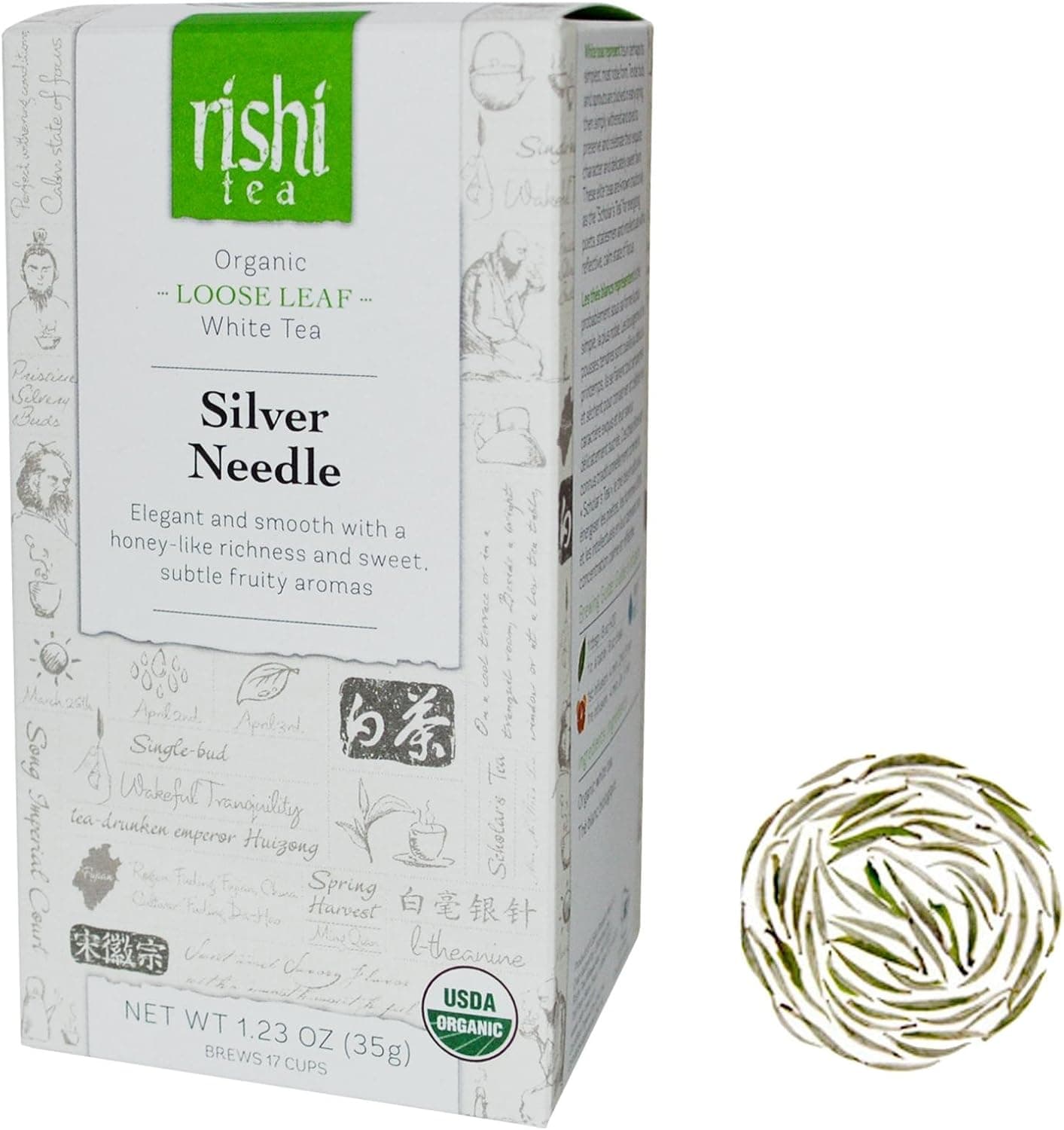
Rishi Tea's organic loose leaf white tea Silver Needle in a 1.23 oz pack, a premium bud tea from a respected importer.
Price range: See on Amazon
What we liked
- + Rishi Tea is known for carefully sourced, high-quality teas
- + Organic silver needle offers a clean, honeyed cup
- + Small pack keeps the tea fresh for occasional drinkers
Trade-offs
- - 1.23 oz is a small amount of tea for a premium brand price
- - Buds are bulky, so the pack goes faster than it looks
Who this white tea is for
Rishi Tea's organic Silver Needle is aimed at someone who already appreciates white tea's subtlety and wants a well-sourced version rather than a generic bulk option. Silver needle is made purely from early spring buds rather than mature leaves, which gives it a naturally sweet, delicate character that is easy to overwhelm with heavy-handed brewing or strong food pairings. Rishi sources this tea from Jinggu in Yunnan Province, using ancient broadleaf tea tree varieties that the brand says add complexity compared with more common silver needle sources. That background makes it a good fit for a tea drinker who cares about provenance and is willing to treat white tea as a slower, more deliberate ritual rather than an everyday bulk beverage.
What is in the pack
This is a small pack of organic silver needle tea made entirely from tea buds, without stems or larger leaves mixed in, which is part of what makes silver needle a premium style within white tea generally. Rishi notes that producing just one kilogram of finished silver needle requires plucking more than 30,000 individual buds by hand, which explains both the delicate appearance of the leaves and the higher price relative to bulkier teas. The flavor comes through as smooth and mild, with honey and floral notes and a fruity aroma that Rishi attributes to the specific broadleaf tea trees used in Jinggu. White tea in general is lower in caffeine than black or green tea, though silver needle can run slightly higher than other white styles since it is made from young buds where the plant concentrates caffeine.
How to brew silver needle properly
White tea rewards gentler brewing than black or green tea, and silver needle is no exception. Cooler water, well under a full boil, and a longer steep time than you might use for a robust black tea are typically recommended to draw out the tea's natural sweetness without extracting excess bitterness from the buds. Because the leaves are whole, undamaged buds rather than broken leaf, silver needle also tends to hold up well to multiple infusions from the same portion, with the steeping time increased slightly on each subsequent brew. Taking the time to measure water temperature rather than using straight-off-the-boil water makes a noticeable difference with a tea this delicate.
Where the value trade-off shows up
Silver needle is inherently one of the more expensive white tea styles because of how labor-intensive it is to produce, and this small pack size reflects that reality rather than an unusually high markup. For an occasional white tea drinker, the smaller amount actually works in the tea's favor, since it can be used up before it goes stale rather than sitting half-finished for months. For someone who wants to drink silver needle daily, the pack will need replacing fairly often, and a larger bulk size from the same or a similar source would bring the cost per cup down meaningfully over time.
How it compares to other silver needle teas
Compared with Oriarm's Fuding-origin silver needle, which draws on the tea's traditional home region in Fujian, Rishi's Yunnan-sourced version offers a different regional character built around older broadleaf tea trees rather than the classic Fujian cultivar. Both are legitimate, well-regarded approaches to silver needle rather than one being simply better than the other, and the choice often comes down to whether a drinker prefers the traditional Fuding profile or Yunnan's fruitier, more complex take. Against cheaper bulk silver needle blends that mix in broken leaf or lower grades, Rishi's focus on whole buds and organic certification justifies its higher price for drinkers who prioritize quality over volume.
Frequently asked questions
Is Rishi's silver needle tea organic?
Yes, this white tea is certified organic and made entirely from hand-picked tea buds.
Where does this silver needle tea come from?
Rishi sources it from Jinggu, a mountainous area of Pu'er County in Yunnan Province, China, using ancient broadleaf tea tree varieties.
Does silver needle tea have caffeine?
It contains less caffeine than black or green tea, though silver needle tends to have somewhat more caffeine than other white tea styles because it is made from young buds.
How should silver needle white tea be brewed?
Use water well below boiling and a longer, gentler steep than you would for black tea, and expect the whole buds to hold up to more than one infusion.
Prices change often, so check the current price and availability on Amazon.
Check price on AmazonTea Bar Hub may earn a commission from the link above.