FullChea Anxi Tieguanyin Oolong Tea Loose Leaf - Tie Guan Yin - 8oz / 226g Review (2026)
Updated September 20, 2026 · Research-based review
Our verdict
A loose leaf Tieguanyin oolong from Anxi, Fujian, the traditional home of this tea style, sold in an 8 ounce bag. It suits fans of light, floral oolong and gongfu style multiple infusions, but roasted oolong drinkers may find it too delicate.
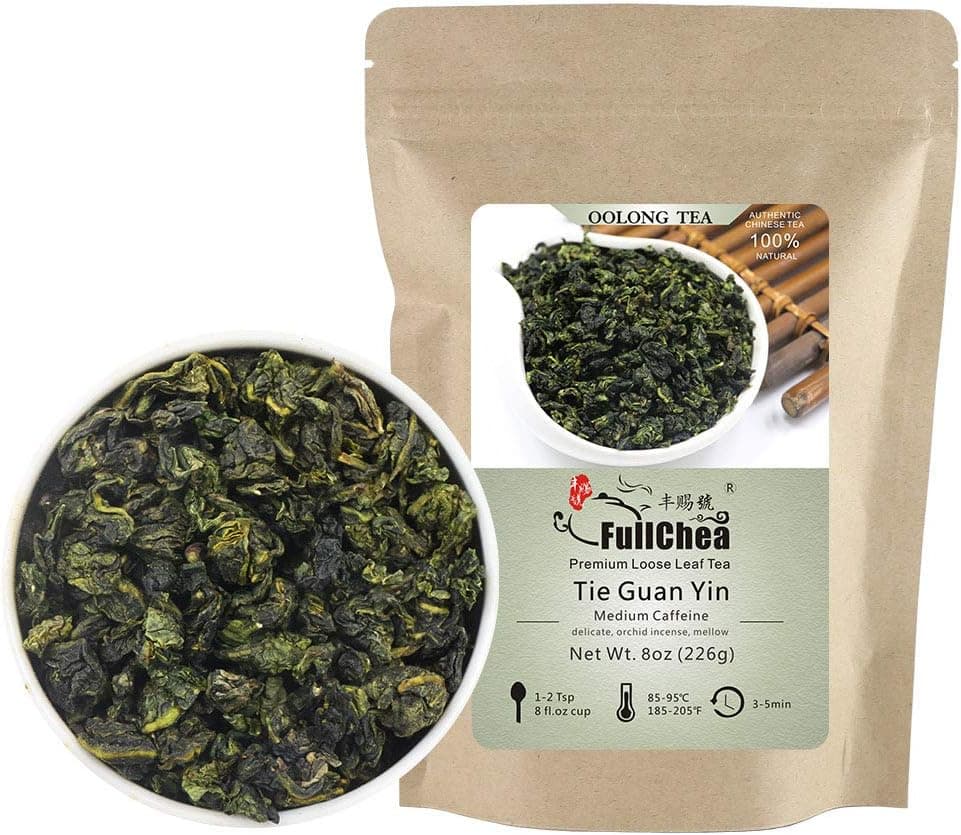
FullChea's Anxi Tieguanyin oolong tea loose leaf, 8oz / 226g, from the traditional home of Tie Guan Yin.
Price range: See on Amazon
What we liked
- + Anxi origin is the classic region for Tieguanyin oolong
- + 8oz / 226g amount lasts many gongfu sessions
- + FullChea specializes in Chinese teas, especially oolong
Trade-offs
- - Floral green-style Tieguanyin may taste light to roasted oolong fans
- - Freshness of lightly oxidized oolong fades faster once opened
What it is
This is loose leaf Anxi Tieguanyin, also called Tie Guan Yin or Iron Goddess of Mercy, grown in Anxi county in Fujian province, which is considered the classic origin region for this oolong style. FullChea sells it in an 8 ounce, 226 gram bag, a quantity suited to regular gongfu style brewing rather than a small sampler pack. The maker describes the tea as hand picked and free of artificial sweeteners, flavorings or added colorings, which fits how traditional Tieguanyin is typically processed and sold, without the additives sometimes used in flavored or blended tea products.
Flavor and style
This is a lightly oxidized, green style Tieguanyin rather than the darker, more roasted version some oolong drinkers may be used to. The tasting notes describe a light, floral character with orchid and lilac notes, a light golden amber liquor, and a smooth body with a sweet finish. That profile places it closer to the fragrant, floral end of the oolong spectrum, so someone expecting a heavier, toasted flavor from a darker oolong will find this noticeably lighter and more delicate in comparison, closer in character to a fine green tea than to a roasted Wuyi rock oolong, and best appreciated brewed at a slightly lower temperature than a full rolling boil.
Brewing approach
Loose leaf Tieguanyin like this is well suited to gongfu style brewing, using a small teapot or gaiwan, a higher ratio of leaf to water, and short, repeated infusions rather than one long steep in a large mug. The tea is described as holding up to multiple infusions, with the flavor evolving across the first few pours, which is part of the appeal of this brewing style. A Western style single long steep will work too, but will not show off the layered character that gongfu brewing draws out of a quality oolong, since each short infusion tends to reveal a slightly different note as the leaves continue to unfurl.
Freshness and storage
Lightly oxidized, green style oolongs like this Tieguanyin are generally more sensitive to air, light and moisture than darker roasted oolongs or black teas, so the floral aroma and brightness fade faster once the bag is opened. Keeping the tea in a sealed, opaque container away from heat and strong odors in the kitchen will help preserve its character for longer, since loose leaf tea readily picks up smells from spices or coffee stored nearby. Because the leaves are not heavily oxidized or roasted, this is not a tea to stockpile for years the way a well aged, darker oolong might be, so buying an amount you will get through within several months is the safer approach.
Who should buy it
This tea suits someone who already enjoys light, floral oolongs, or a gongfu tea drinker looking for an approachable Anxi style Tieguanyin from a brand that specializes in Chinese tea. The 8 ounce bag is a practical size for regular use rather than an occasional cup. Drinkers who prefer a roasted, dark oolong with toastier, less floral notes, or who mainly brew tea bags in a mug, may find this style and format less suited to their habits than a darker Wuyi or Taiwan style oolong, or a black tea with a bolder, maltier cup.
Frequently asked questions
Is this a light or dark style of Tieguanyin?
It is a lightly oxidized, green style Tieguanyin with floral orchid notes and a light golden amber liquor, rather than a darker, roasted oolong.
Where does this tea come from?
It is grown in Anxi county in Fujian province, China, the traditional home region for Tieguanyin oolong.
How many times can the leaves be steeped?
Loose leaf Tieguanyin like this is generally brewed gongfu style with multiple short infusions, and this tea is described as holding up across several steeps.
How should I store the tea to keep it fresh?
Keep it in a sealed, opaque container away from light, heat and strong odors, since lightly oxidized oolongs lose their floral character faster once opened.
Prices change often, so check the current price and availability on Amazon.
Check price on AmazonTea Bar Hub may earn a commission from the link above.