Premium Japanese Ceremonial Matcha Green Tea Powder, 1st Harvest Highest Grade, USDA & JAS Organic, 3.53oz / 100g Review (2026)
Updated September 14, 2026 · Research-based review
Our verdict
A dual certified organic ceremonial matcha in a 100 gram bag, sized for people who drink matcha most days rather than occasionally. The 1st harvest grade and USDA plus JAS organic status make it a credible everyday option, though the unbranded listing gives no farm or region detail beyond Japan.
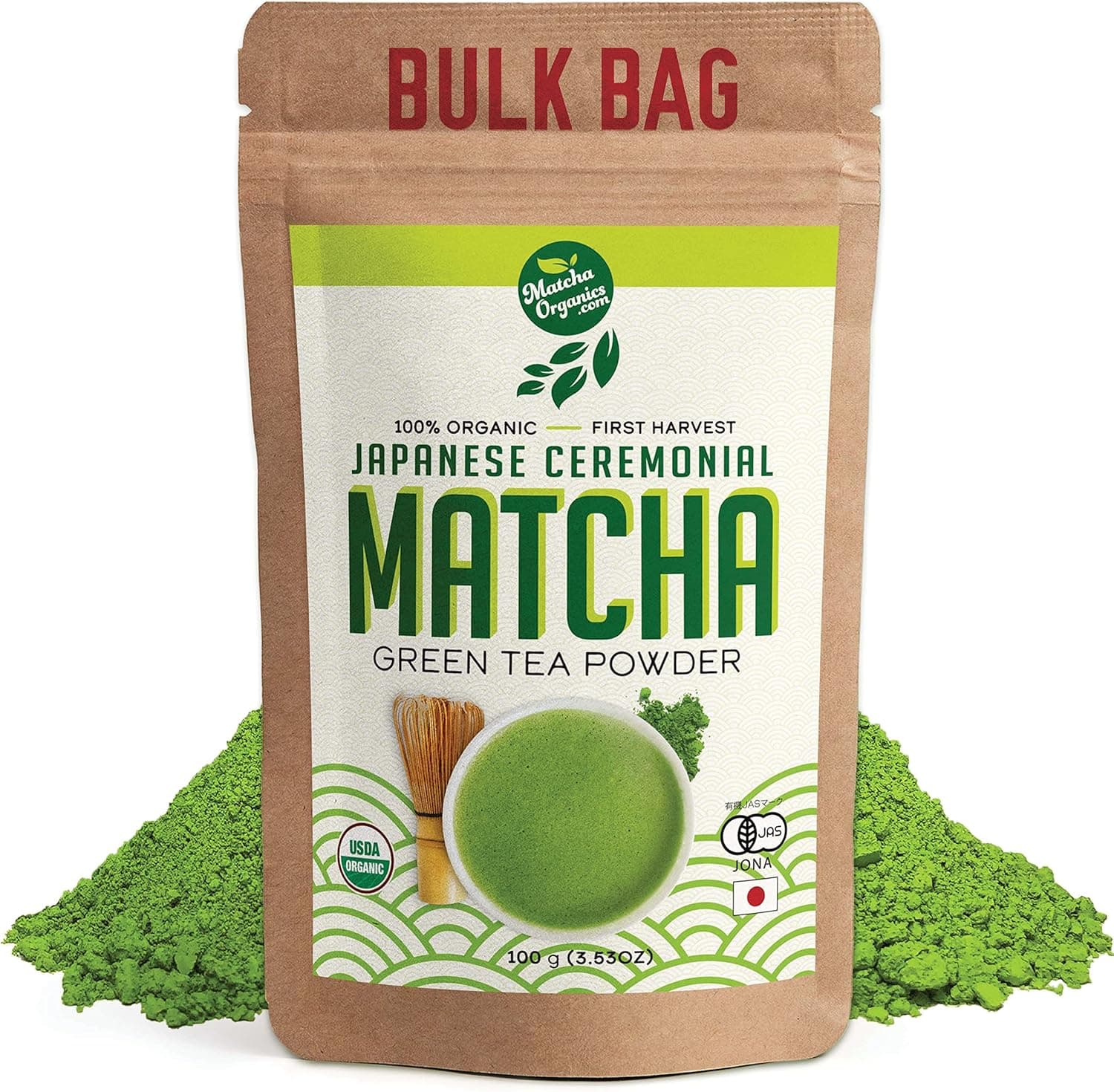
A 3.53oz / 100g premium Japanese ceremonial matcha, 1st Harvest and USDA & JAS Organic, for daily matcha drinkers.
Price range: See on Amazon
What we liked
- + USDA & JAS Organic certifications cover both US and Japanese standards
- + 3.53oz / 100g bag is a better value than small tins for daily use
- + 1st Harvest leaves give a smoother, brighter tasting cup
Trade-offs
- - Check for more specific farm or region details if that matters to you
- - Larger bag needs resealing carefully to keep the powder fresh
Who this matcha fits
This is a ceremonial grade matcha from Japan, made from first harvest leaves and certified organic under both USDA and JAS, Japan's own organic standard. It is aimed at people who already drink matcha regularly, whether whisked plain, mixed into a latte, or blended into a smoothie, since the 100 gram bag is a larger format than the small tins many ceremonial matchas ship in. It suits buyers who want dual organic certification without paying tin packaging prices, and who are comfortable transferring powder into their own airtight container rather than relying on a resealable tin. It is a weaker fit for someone who wants full traceability down to a named farm or region, since the listing identifies the origin only as Japan without further detail.
Grade, harvest and certification
Ceremonial grade matcha is the finer, more expensive category typically meant for whisking with water alone, as opposed to culinary grade, which is coarser and made for baking or mixing into other drinks. This matcha is described as first harvest, the earliest picking of the season, which tea makers generally associate with a smoother, less bitter cup than later harvests. The USDA and JAS organic certifications cover both the American and Japanese organic standards, which is a meaningful detail for buyers who specifically shop for dual certified matcha rather than one certification alone. The 100 gram, 3.53 ounce size works out to roughly 100 single servings at a standard one gram scoop, making it a bulkier buy than most ceremonial tins.
Using and storing it
The listing markets this matcha for lattes, shakes, smoothies and baking in addition to traditional whisking, so it is positioned as a flexible everyday powder rather than a ceremony only product. Matcha in general is sensitive to air, light, heat and moisture, all of which degrade its bright color and fresh flavor over time, so it benefits from being kept sealed and refrigerated once opened. Because this comes in a resealable bag rather than a rigid tin, buyers who want to keep the powder at its best for months should reseal it carefully after each use or transfer it into an airtight tin of their own. Whisking ceremonial matcha with a bamboo whisk and water just off the boil is the traditional method, though it blends into milk for lattes as well.
How it stacks up against other matcha
Against small tin competitors such as Matcha Organics or Aiya, both of which also claim first harvest and USDA plus JAS organic status in smaller 30 gram tins, this listing offers more matcha for the format, which suits steady drinkers who go through powder quickly. The trade-off is presentation and traceability, since branded tins from established Japanese matcha houses generally name a specific region or farm, while this listing does not go beyond identifying Japan as the origin. Buyers focused purely on getting organic, first harvest matcha in bulk without paying for tin packaging or brand storytelling get good value here, while those who care about knowing the exact growing region should compare against a named brand instead.
Verdict and who should choose differently
This matcha is a solid pick for regular drinkers who want dual USDA and JAS organic certification and first harvest quality in a larger, resealable format instead of a small tin. It fits people making matcha lattes or smoothies as part of a daily routine, where the bigger bag actually gets used up before it goes stale. Shoppers who want a named farm, a specific Japanese region, or the presentation of a traditional tin for gifting should look toward a branded ceremonial matcha instead, since this listing keeps its origin story to Japan alone.
Frequently asked questions
What is the difference between ceremonial and culinary grade matcha?
Ceremonial grade is finer and milder, meant for whisking with just water, while culinary grade is coarser and more bitter, made for baking or mixing into other drinks.
Is this matcha organic?
Yes, it carries both USDA organic certification and Japan's JAS organic certification, covering the American and Japanese organic standards.
How should I store matcha to keep it fresh?
Keep it sealed, away from light and heat, and refrigerate after opening, since matcha loses its bright color and flavor quickly when exposed to air and moisture.
Can this matcha be used for lattes and baking, not just traditional tea?
Yes, the listing markets it for lattes, shakes, smoothies and baking in addition to being whisked the traditional way with water.
Prices change often, so check the current price and availability on Amazon.
Check price on AmazonTea Bar Hub may earn a commission from the link above.