Jinglong Tea Factory Old Big Leaf Loose Leaf Pu-erh Tea, Ripe and Raw Sampler Review (2026)
Updated September 14, 2026 · Research-based review
Our verdict
Jinglong's Old Big Leaf sampler pairs ripe and raw pu-erh from the same varietal so a curious drinker can taste both styles side by side. It is built for exploration rather than daily stocking up, so a beginner gets an education while a committed pu-erh drinker will want a full-size bag once they know which style they prefer.
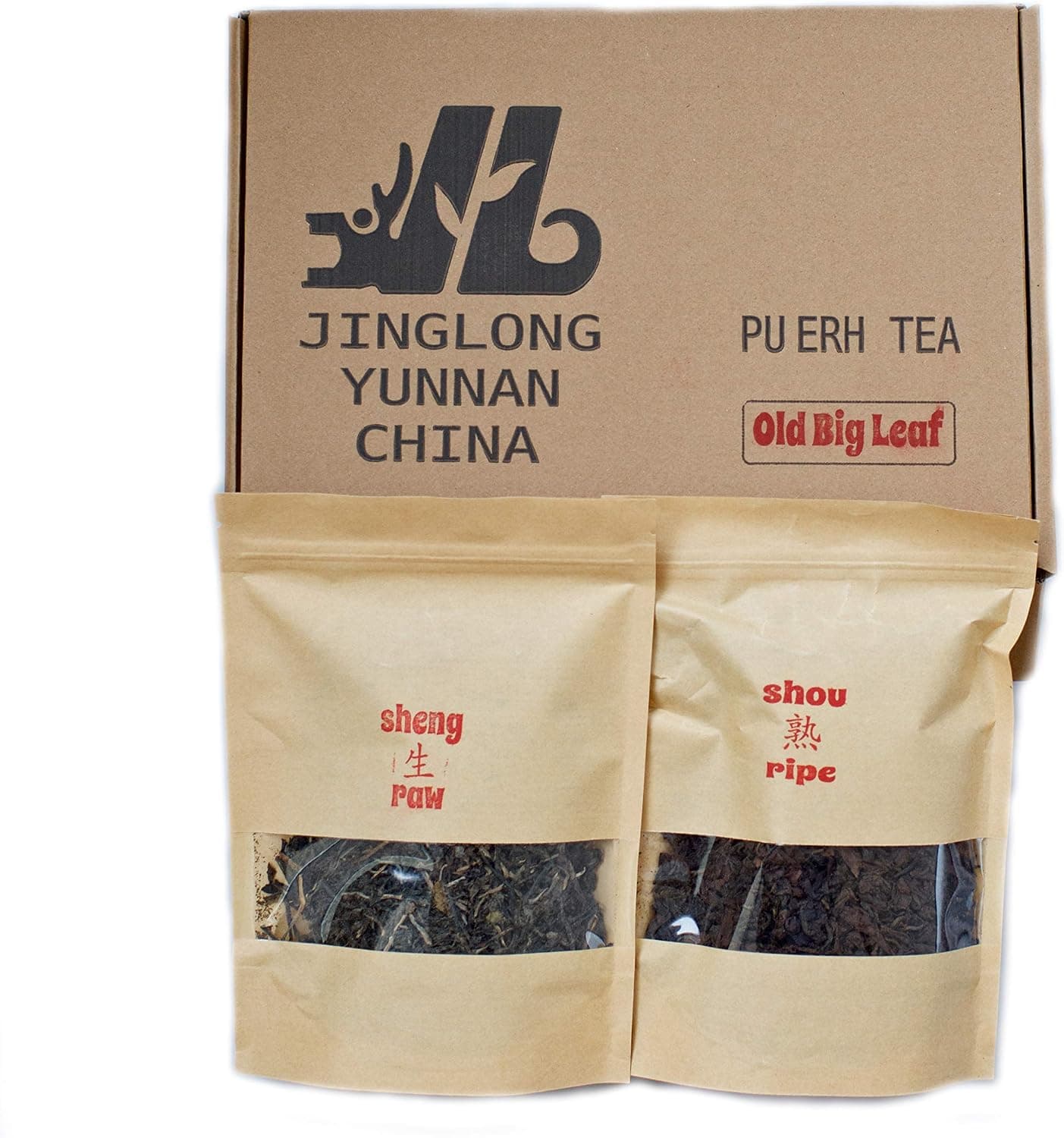
Jinglong Tea Factory's Old Big Leaf loose leaf pu-erh sampler with both ripe and raw styles for side-by-side tasting.
Price range: See on Amazon
What we liked
- + Ripe and Raw Sampler lets you compare the two main pu-erh styles
- + Old Big Leaf varietal is a hallmark of Yunnan pu-erh
- + Great introduction for someone new to pu-erh
Trade-offs
- - Sampler quantities are small for daily drinking
- - Raw pu-erh can taste sharp and astringent to beginners
Who this sampler fits
This sampler is aimed at someone who is curious about pu-erh but has not yet decided whether they prefer the earthy, mellow character of ripe pu-erh or the sharper, more evolving character of raw pu-erh. Packaging both styles from the same Old Big Leaf varietal in one box makes it easy to brew them back to back and compare directly, which is a more useful way to learn the category than buying two unrelated bags from different farms. It suits a tea drinker who already enjoys black or oolong tea and wants to branch into fermented and aged styles, or a gift for someone building out a loose-leaf collection. It is not the right pick for someone who already knows they want one style specifically for daily drinking in bulk, since a sampler by nature favors variety over quantity.
What is in the box and where it comes from
The sampler contains loose leaf pu-erh in two styles: ripe, sometimes called shou or black pu-erh, and raw, sometimes called sheng or green pu-erh, both from the Old Big Leaf varietal that is considered a hallmark of Yunnan province tea production. Jinglong Tea Factory is a family-run operation established in 2004 in Yiwu, one of the most well known tea growing and trading towns in Yunnan, built as a partnership between western tea entrepreneurs and a local old-tree tea producer. Ripe pu-erh from the region is made using a wet-pile post-fermentation process applied to sun-dried big-leaf loose green tea, which is what gives ripe pu-erh its darker color and mellower, earthier flavor compared with the lighter, more astringent raw style in the same sampler.
Brewing and living with the tea
Ripe pu-erh is typically brewed with water close to a full boil, in the range of 208 to 212 degrees Fahrenheit, since the fermented leaf can handle heat that would scorch a delicate green tea. For a standard cup, a few minutes of steeping works well, and the same leaves can be brewed gongfu style instead, using shorter thirty to sixty second infusions with a stronger leaf-to-water ratio across several rounds, which tends to bring out more nuance than one long steep. Raw pu-erh in the sampler can be brewed the same way, though newer drinkers should expect a sharper, more astringent cup than the ripe side, especially with young raw pu-erh that has not had years to mellow with age. For exact quantities and any specific storage guidance, follow what is printed on the Jinglong packaging rather than general advice, since post-fermented tea can be sensitive to how it is kept.
Trade-offs against other pu-erh options
Against a larger single-style bag like the Tealyra 5 Years Aged Ripe Pu'erh, a higher-scored rival in our pu-erh guide, this Jinglong sampler trades away the ability to stock up on one favorite style in exchange for the chance to compare ripe and raw before committing to either. Against other ripe-only options such as the Oriarm or TIAN HU SHAN loose leaf pu-erh, this sampler's raw pu-erh half is the clear differentiator, giving a fuller picture of the category rather than just one fermentation style. The trade-off that applies across the board with any sampler is quantity: splitting a smaller total amount of tea between two styles means less of each to drink daily compared with a full bag dedicated to a single style, which matters if you already know you only want ripe or only want raw.
Verdict and who should pick something else
With our score of 8.2 out of 10 and a strong rank in our pu-erh tea guide, this sampler earns its place as an accessible, well-sourced way to learn the difference between ripe and raw pu-erh from a single reputable Yunnan producer. Choose it if you are new to pu-erh, want to taste both major styles before buying in bulk, or are shopping for a gift for a tea-curious friend. Look elsewhere if you already know you prefer ripe pu-erh specifically and want a larger everyday supply, in which case a dedicated bag like the Tealyra aged ripe pu-erh will go further, or if you want to start directly with raw pu-erh and skip the beginner-friendly comparison format altogether.
Frequently asked questions
What is the difference between the ripe and raw pu-erh in this sampler?
Ripe, or shou, pu-erh goes through a wet-pile fermentation process that gives it a darker color and mellower, earthier taste, while raw, or sheng, pu-erh skips that step and tends to taste sharper and more astringent, especially when young.
What water temperature should I use to brew this pu-erh?
Both styles in this sampler are generally brewed with water close to a full boil, in the 208 to 212 degree Fahrenheit range, since fermented and semi-oxidized leaves can handle more heat than delicate green or white tea.
Is this sampler a good starting point for someone new to pu-erh?
Yes, pairing both major pu-erh styles from the same varietal makes it easier to taste the difference side by side than buying two unrelated bags, which is why it works well as an introduction.
Where does this tea come from?
It comes from Jinglong Tea Factory, a family-run producer established in 2004 in Yiwu, a well known tea growing and trading town in Yunnan province, China.
Prices change often, so check the current price and availability on Amazon.
Check price on AmazonTea Bar Hub may earn a commission from the link above.